
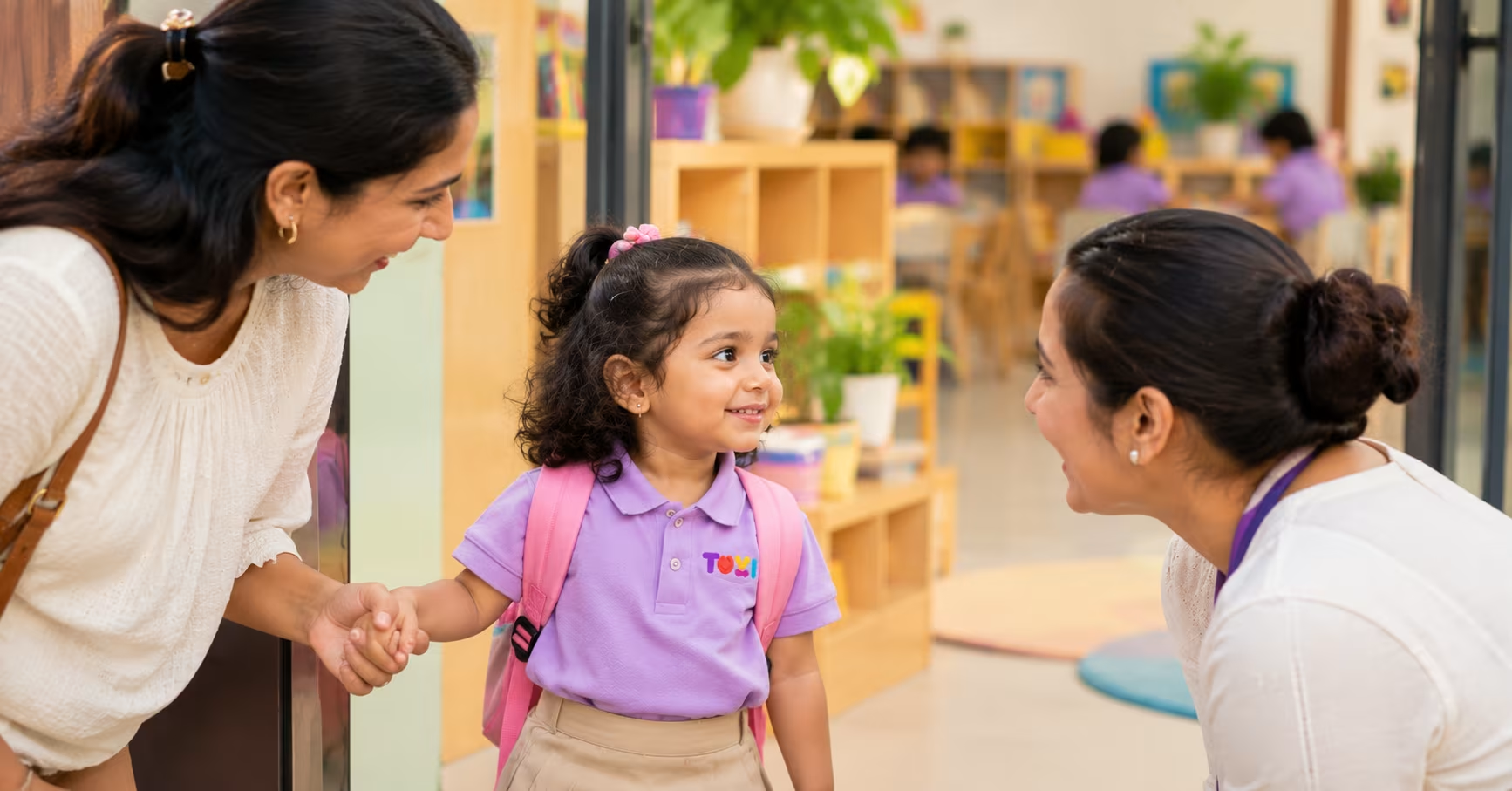
Parents ask this question early. Is my child old enough? Is my child too old? You want a good start for your child, and you do not want to rush.
In India, children often start preschool between 2 and 4 years, depending on the programme and the school’s admission criteria. Playgroup typically begins around 2, while Nursery usually starts around 3. But age is only a starting point. Your child’s readiness matters just as much.
In my experience, this is one of the most common questions parents ask. Between 2 and 4, children are exploring the world through their five senses. They are curious about the things around them and want answers to their questions. Preschool gives them more opportunities to explore that curiosity.
Age and Readiness Are Two Different Things
Age tells you how many birthdays your child has had. Readiness tells you how your child handles a new room, new adults and a new routine.
Two children of the same age can respond very differently to preschool.
Last year in my playgroup, I had two children who were both two and a half years old. One entered the classroom on the first day and immediately became engrossed in the toys. The other held my finger and followed me wherever I went.
Within a month, both children had settled so well that you wouldn’t have been able to tell the difference.
The transition takes time. Some children need more reassurance than others, and that is perfectly normal.
Six Signs of Preschool Readiness
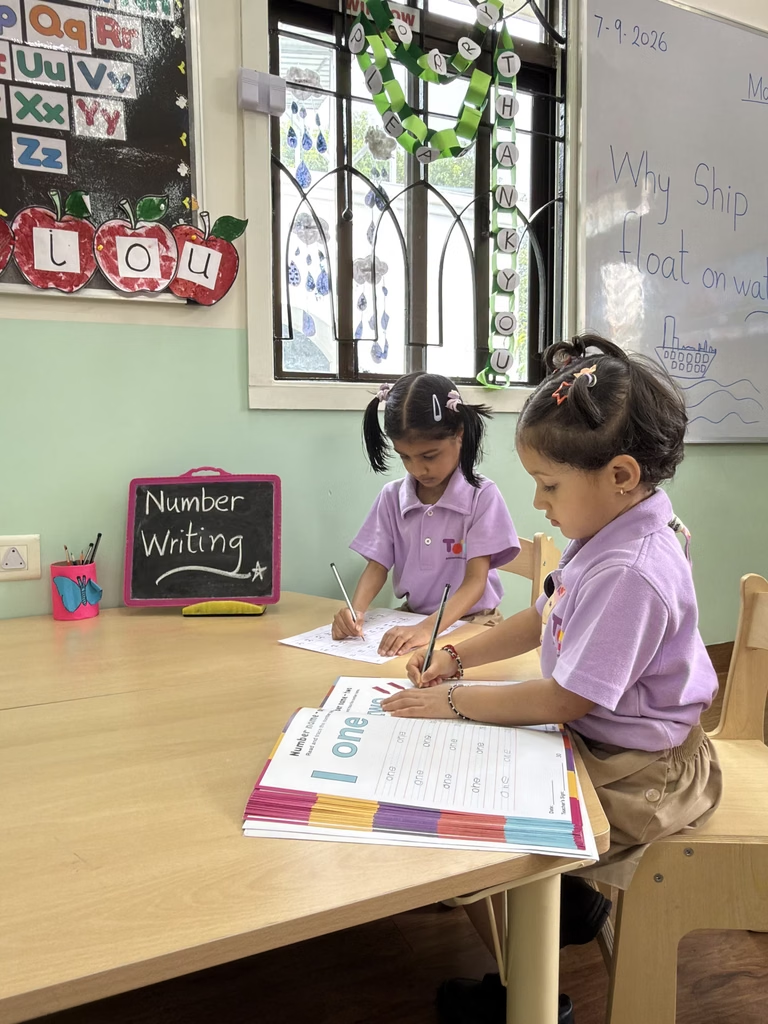
Look at these signs before you look at the calendar. Your child does not need to show all six on the first day.
1. Emotional Readiness
Your child is beginning to feel comfortable with other trusted adults. Some worry at goodbye is normal, especially during the first few days.
2. Social Readiness
Your child notices other children and shows interest in being around them. Playing alongside other children counts at this age.
3. Language Readiness
Your child communicates needs through words, gestures or actions. Clear speech is not a requirement for starting preschool.
4. Self-Care Readiness
Your child is beginning to learn everyday habits such as eating, washing hands and using the toilet with help.
5. Routine Readiness
Your child is becoming familiar with simple routines, such as putting toys away, following instructions or sitting for a short activity.
6. Curiosity and Participation
Your child shows interest in toys, books, songs, people or new surroundings.
These are signs to observe, not a test your child must pass.
Does Your Child Need to Speak Clearly Before Preschool?
No. Communication is not only verbal.
Parents sometimes worry that their child is not learning because they cannot speak much yet. But children communicate through their actions too.
A child may not be able to say “lunch box”, but pointing towards it clearly tells us what they need. With encouragement and regular interaction, children have more opportunities to develop their language.
You should not wait for your child to learn the alphabet, count to 20 or write their name before enrolling them in preschool. These are skills they will begin learning through age-appropriate activities.
If you have concerns about your child’s speech or development, discuss them with your paediatrician rather than relying on preschool alone.
What About Toilet Training?
Many parents worry about toilet training before preschool admission.
At Tovi, we do not expect children to be fully toilet trained when they join Playgroup. We do ask parents to share their child’s routine.
This helps our educators and didis support children as they learn to manage their toilet habits.
Every child needs a little patience during this stage, and working together with parents makes the transition easier.
Preschool Age by Programme in India
Schools generally organise their early-years programmes around these age groups.
| Programme | Usual Age | Main Focus |
|---|---|---|
| Playgroup | 2–3 years | Play, social interaction, language and routines |
| Nursery | 3–4 years | Early literacy, numeracy and guided activities |
| Junior KG (LKG) | 4–5 years | Early reading, writing and problem-solving |
| Senior KG (UKG) | 5–6 years | Greater independence and preparation for Class 1 |
These are also Tovi’s published programme age bands. You can learn more about our Playgroup, Nursery, Junior KG and Senior KG programmes.
Actual admission eligibility depends on the applicable age cut-off and school requirements.
What Are the Preschool Age Guidelines in India in 2026?
India’s current education framework follows the National Education Policy (NEP) 2020, supported by the National Curriculum Framework for Foundational Stage 2022.
Under this framework, the Foundational Stage covers children aged 3 to 8. It includes three years of preschool or Balvatika, typically from ages 3 to 6, followed by Classes 1 and 2.
The emphasis during these years is on play-based, activity-based and experiential learning rather than early academic pressure.
However, this does not mean children cannot begin Playgroup before age 3. Many preschools offer Playgroup programmes for children around age 2, subject to their admission criteria and applicable rules.
For parents, the important distinction is between the national education framework and actual admission eligibility. Age cut-offs can differ by state and academic year, so always check the requirements that apply to your child’s admission.
Sources:
Ministry of Education, 29 July 2026: Foundational Literacy and Numeracy
Ministry of Education, 10 August 2026: Alignment with NEP 2020
Maharashtra’s Preschool Admission Age Rules
For parents in Pune, there is another important detail to consider.
Maharashtra announced updated admission age criteria on 15 October 2026. The new rules will take effect in phases.
| Programme | Minimum Age | Effective From |
|---|---|---|
| Nursery | 3 years | 2027–28 |
| Junior KG | 4 years | 2028–29 |
| Senior KG | 5 years | 2029–30 |
| Class 1 | 6 years | 2030–31 |
Under the new framework, children must complete the required minimum age by 30 June of the admission year.
The rules also allow school heads to grant an age relaxation of up to 15 days within the prescribed limits. However, this is not automatic, so parents should confirm eligibility with the school before applying.
The updated criteria do not apply retrospectively to children already enrolled during the 2026–27 academic year.
If your child’s birthday falls close to the cut-off, ask the school to check eligibility before making an admission decision.
For more details, read the Maharashtra school admission age announcement published on 16 October 2026.
Is It Better to Start Preschool at 2, 3 or 4?
Each age has its own advantages and challenges.
Starting at 2: Your child begins exploring a group environment, interacting with other children and getting used to simple routines. Separation may take more time, so a gentle introduction matters.
I remember a two-year-old in my class who was fascinated by chalk and a slate. Every day, he would scribble something, wipe it clean and start again. He enjoyed doing this by himself and didn’t want another child sitting beside him.
One day, another child approached him. This time, he let the child sit next to him and even gave him the job of cleaning the slate after he finished writing.
It was a small moment, but I could see how he was beginning to share and enjoy another child’s company.
Starting at 3: Many children become more comfortable expressing their needs, following familiar routines and participating in group activities. Nursery may be appropriate, depending on age eligibility and readiness.
Starting at 4: Four is not too late to begin preschool. Children can join an age-appropriate programme and gradually become familiar with its activities and classroom routines.
The important question is not simply when other children started. It is whether the programme suits your child’s age, needs and experience.
How to Prepare Your Child for Preschool
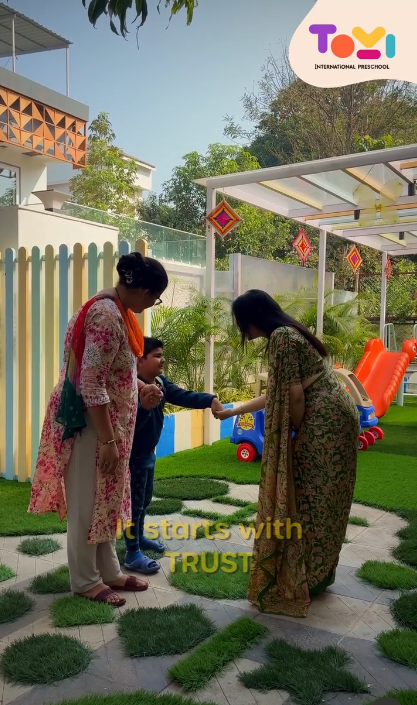
A few simple habits at home can make the first days easier.
- Talk positively about school and what your child can expect.
- Begin following a sleep and meal routine similar to the school day.
- Practise short, predictable goodbyes.
- Let your child become familiar with carrying a bag and managing simple belongings.
- Visit the preschool together before the first day, if possible.
Don’t worry if your child cries at drop-off. Give them time to become familiar with their teacher and surroundings.
At Tovi, we follow a gradual settling-in process. During the initial days, parents can remain on campus in our Parent Hub while their child becomes comfortable with the new environment.
How Children Settle In at Tovi
In my experience, settling into preschool is different for every child. Some children become comfortable within a week, while others may take a month.
On the first day, I spend time observing what makes each child feel safe. One child may want to sit on my lap, another may hold a favourite soft toy, while someone else may prefer standing near the door and watching the classroom.
We don’t expect every child to adjust to the full routine immediately. During the initial days, we pay attention to their energy and comfort levels. As they become familiar with the environment, we gradually extend their time at school.
Sometimes, children join Tovi a few months after the academic year has started. In such cases, we help them settle by seating them beside a friendly classmate who can make them feel welcome.
Every child settles differently. What matters is giving them the time and reassurance they need.
Frequently Asked Questions About Preschool Age
What is the right age to start preschool in India?
Many children begin Playgroup between 2 and 3 years, while Nursery generally starts around age 3. The right time also depends on your child’s readiness, the programme and the school’s admission requirements.
Is the preschool admission age the same across India?
No. NEP 2020 provides a national framework for early education, but admission cut-off dates and age requirements can differ between states. Parents should check the rules applicable to their child’s admission year.
Is 2 years too early for preschool?
Not necessarily. Many children begin Playgroup around age 2. Choose a programme that suits your child’s needs, and ask how the school supports children who are new to group settings.
Is 4 years too late to start preschool?
No. Children can begin at 4, provided they meet the admission requirements for an appropriate programme.
Should I choose Playgroup or Nursery for my 3-year-old?
Check your child’s age eligibility first. Then consider their previous group experience, communication and comfort with routines. The school can help you understand which programme is appropriate.
Does my child need to be toilet trained before joining?
Requirements vary by school. At Tovi, children joining Playgroup do not need to be fully toilet trained. We work with parents to understand and support their routine.
What if my child misses the admission age cut-off?
Ask the school about the applicable rules and any permitted relaxation. Your child may need to enter a different programme or wait until the next admission year.
Choose by Your Child First, Then by the Calendar
There is no single age that suits every child.
Look at your child’s readiness, check the admission requirements and visit the school before making your decision.
If you are exploring preschool options in Magarpatta, Pune, we welcome you to visit Tovi International Preschool, meet our educators and understand which programme may suit your child.
TOVI INTERNATIONAL PRESCHOOL · MAGARPATTA
Come see TOVI for yourself.
Explore our classrooms, meet our educators and see what a day at Tovi looks like.